
- Proudly Caring for VETERANS
- To the Point Healthcare2186 Lynn Rd
Suite A
Columbus, NC. 28722828-817-4734 Monday - Friday 9am - 6pm
Weekend and Evening hours available on requestVisit our Facebook page

- Testimonials
Love Cynthia….i have only had 2 sessions thus far & the second session was great…it helped me so much cause she actually listened to my concerns & our plan of care this week helped so much…the week before (my first session) was not as dramatic as i anticipated but think that had mostly to do with my own state of mind…Cynthia is a kind & caring provider & i trust her with helping me achieve all of my health goals…i... Read more »
These treatments have really effected my life in a positive way. Also very enjoyable and relaxing! Thank you! Jennifer C. 7/15/2016
I had a wonderful experience and successful outcome at To The Point Healthcare. Cynthia is kind, knowledgeable and proficient. I would not hesitate to recommend her to friends and family. Geri L 11/17/2016
The first time I came I had back and heart issues, also poor circulation. So much so I looked like a ghost. Cynthia has brought my color back thru better blood circulation and I feel so much better. Thanks so much Cynthia. James Jones 8/26/2016
After several visits I know I am in the very competent hands of a caring health provider. Cynthia’s approach treats the whole person, which makes so much sense. My sinus and other problems are clearly improved and I am now aware of various ways I can work on improving my overall health and immune system. I am grateful to the kind person who recommended Cynthia to me! Pat G. 11/28/2016
Cynthia is a great listener, which, I believe, to be THE critical issue missing in quality health care. Her ability to listen makes her ability to provide the optimal treatment for your particular issue. Highly recommend! Leah R. 6/2016
I signed up for the acupuncture treatment and I was super satisfied with the results. I was expecting it to be something that would hurt because of the use of needles however, this is not the case I actually enjoy getting treatments. Cynthia is amazing at what she does and she always makes me feel comfortable and relaxed! I highly recommend To the Point Healthcare it has been a big part of my recovery. Kayla R 1/2017
Was a very pleasant experience. Felt a difference after treatments. Would recommend to anybody who has these type of problems. Reggie D 8/19/2015
After only one visit, the pain and soreness I’ve been dealing with for over 5 months is remarkably better! Cynthia took as much time as I needed and answered all my questions and concerns. 3/9/2015
Cynthia’s calming nature put me at ease from the time she began the initial examination through the entire treatment. Explanations were clear and questions were answered expertly. I enjoyed the treatment room as it offered soft music and décor that was relaxing. The sensation of needle insertion was minimal and the session was ended by a wonderful shoulder massage and use of the cupping technique. I was given instructions to be kind to myself, which I followed exactly as I... Read more »


Health WellNews
Acupuncture 101: How do Needles Work?
Ever wonder why inserting a tiny needle between your thumb and index finger can help your headache? Or putting needles in your ear can help your indigestion?
Many people wonder how acupuncture works. Scientists and doctors are especially prone to skepticism about acupuncture. To people trained in western medicine, it doesn’t make sense. Traditional Chinese Medicine (TCM) does not follow their familiar logic.
Yet there is growing body of evidence that TCM, and acupuncture specifically, is an effective treatment for many injuries and diseases–often with few side effects. For these reasons more and more hospitals, clinics and doctors worldwide are recommending it for their patients.
Research and clinical trials will continue but for the people who have found relief from their symptoms and conditions using these ancient techniques, such research is unnecessary. They know acupuncture works.
But why?
Western Perspective
There are several theories to explain acupuncture. The most widely accepted is that the stimulation of acupuncture points with needles sends electrical signals to the brain to release endorphins, the chemicals that make us feel good. Another theory states that acupuncture needles stimulate blood flow and tissue repair at the needle sites. Still another states that needles send nerve signals to the brain that regulate the perception of pain and reboot the autonomic nervous system to a “rest and relax” state. Some scientists now believe that acupuncture uses several of these mechanisms at once.
While each theory explains some of the clinical trial results, none of them explain the wide range of conditions that benefit
from acupuncture.
Eastern Perspective
There is no western analogy to Traditional Chinese Medicine concepts.
TCM believes Qi, or life energy, flows through the body. The Qi flows in channels called meridians and the meridians connect the organs together. To remain healthy you need the free flow of Qi through the meridians, much like rivers flow in their riverbeds.
Sometimes the flow of Qi becomes imbalanced. Like a river, it can be blocked, excessive or deficient. To rebalance the Qi, you stimulate acupuncture points to free the flow of Qi
and return it to a more balanced state.
One way to stimulate the points is with acupuncture needles.
Since the meridians connect the organs of the body, sometimes you can stimulate an acupuncture point that seems completely unrelated to the organ you want to balance. If you unblock a river at one point the flow of the entire river, upstream and downstream, returns to normal. Acupuncture works much the
same way.
References:
http://online.wsj.com/article/SB10001424052748704841304575137872667749264.html
Home Back Pain Relief
You’ve probably had lower back pain—80% of us have.
You can be innocently doing the dishes and something tweaks, or you can be working all day in the garden. In either case, suddenly you can’t move. Aches, shooting pain, restricted range of motion, weakness…
Western Medicine describes the cause of lower back pain from a physiological perspective. Typical causes are sprains (overstretching the ligaments), strains (tearing a muscle), herniated discs (budging spinal discs) or sciatica (compression or irritation to the sciatic nerve).
But Traditional Chinese Medicine (TCM) has a different perspective and recognizes 3 main causes of lower
back pain:
- Deficiency: This pain is dull and chronic. Rest relieves the pain and it is common in middle-aged to elderly people.
- Stagnation: This back pain is severe and stabbing. The muscles are stiff and tight. Rest makes the pain worse. Although this pain is common with acute sprains and strains, it can reoccur if there is an underlying deficiency.
- Cold damp: This pain can accompany numbness, swelling or a general feeling of heaviness. It is worse in the morning or in cold, wet conditions. Heat relieves the pain.
For the most effective pain relief, make an appointment with an acupuncturist for a diagnosis and personalized treatment plan. But if you can’t get to an acupuncturist, what can you do at home to get some relief?
- Ice and Heat. Heat relaxes and loosens your muscles and increases blood flow. Ice reduces inflammation and relieves pain. Many people like to alternate heat and ice.
- Walk. Keep moving, especially after the initial pain has passed. Walking loosens the muscles and gets your blood flowing. It is also a pleasant diversion from your discomfort.
- Stretch. Once the acute pain is over, stretch your hips. Pay attention to stretching your hamstrings (the backs of your legs) and your front groins. Go slowly and gently. Use supports to keep from stretching too far.
- Lie on your back with your knees bent. Some people find relief by resting on their back. Be sure your knees are bent to prevent over-arching your lower back.
- Wintergreen. Salves and balms with wintergreen may relieve your pain and reduce inflammation. Wintergreen gives a cooling sensation and has a very pleasant smell.
- Have fun. Watch a funny movie. Visit some friends. Laugh. Enjoy yourself. You’ll feel much better.
- Massage. Massage is quite effective for relieving back pain.
- Swim. Swimming is gentle exercise and terrific for your back.
Beginners Guide to Detoxing
Beginner’s Guide to Detoxing
Grab the mop and broom, throw open the windows and freshen up the house. After the staleness of winter, spring is a great time to clean. The fresh air automatically invites a thorough scrub or a deep dust.
But don’t stop at just cleaning your house. Clean your body too.
Spring is a great time to detox and rid your body of accumulated toxins from the previous year. Traditional Chinese Medicine agrees with this principle and recommends spring as an especially good time to cleanse and detox your liver.
Detoxing is the process of cleaning your organs and tissues. It enhances health, vitality and rejuvenation; it can clear symptoms, treat diseases & protect against future health issues. After a detox you think clearer and feel better. You have more energy. Friends may notice that you glow.
What does Detoxing Mean?
Detoxing lingo can be confusing. Many people use detox terms interchangeably and many of the practices overlap. Here are some of the common terms:
- A fast is a break from eating (and sometimes drinking). Purists don’t eat or drink at all during a fast, but that is extreme. Many people fast with liquids, usually fresh juices, or light foods.
- A cleanse usually refers to a colon cleanse, a program using a combination of fiber, probiotics, laxatives and sometimes enemas to clean the colon of accumulated toxins, undigested food, parasites and fungi.
- A detox is a regime designed to release, neutralize or transform toxins stored in your tissues. It can involve fasting, cleansing, exercise, sweats and/or taking certain supplements. Sometimes you detox your entire body and sometimes you focus on a particular organ or system.
Detoxing Fears
Many people are hesitant to detox. Some are concerned that they will be hungry or have low energy. Some worry that they’ll end up with a headache. Others are afraid that their digestion will be disrupted and they’ll need to stay close to a bathroom. And many people just don’t know where to begin.
There is a trick to successfully accomplishing your first detox without hunger, low energy, headaches, upset digestion or overwhelm—keep it small and simple. Don’t shock your body. Detox in little steps. Use common sense.
A Beginner’s Detox Regime
There are 3 simple keys to a successful first detox:
Start small. Your first detox should be 1-3 days and take advantage of night hours. For example, begin with a 36-hour detox. Start your regime at night, after dinner. Continue through the next day and break your detox with breakfast on the third day.
Ease into your detox and ease out of it. Eat a healthy diet at least 2 days before and after your detox. Avoid junk food, sugar, coffee or alcohol. Be kind to yourself and don’t shock your system.
Drink lots of water to help flush the toxins.
Below is a list of easy beginner detoxing regimes. Pick the one that suits you best.
Eliminate junk food. The first level of detoxing is to reduce your toxic diet. Eliminate sugar, processed foods, soda, coffee and alcohol. Eat regular meals, but restrict junk food.
Eliminate grains, meat or dairy. The next level of detox is to focus on fresh, plant-based foods that are high in nutrition. Increase your fiber and nutrients. Decrease foods that are higher on the food chain.
Lemonade Cleanse. The Lemonade Cleanse (also called the Master Cleanse) is a great beginner juice fast. Mix 2 TBs freshly squeezed organic lemon juice with 1 TB pure maple syrup, a pinch of cayenne and 8oz of filtered or spring water. Drink 8-12 glasses throughout the day. Usually this cleanse is done for up to 2 weeks, but it’s perfectly fine to start with a shorter time.
The lemon juice is a great detoxer, especially for the liver. The cayenne stimulates digestion, increases circulation, and thins and purifies your blood. Both lemon juice and cayenne break up mucus. The maple syrup provides energy to keep you going during the day.
Detoxing is a boon to your health, but it can be a challenge if you have never done it before. To add extra value to your “spring cleaning,” get an acupuncture tune-up before and after your detox. I can recommend the best regime for your constitution and support the detoxing process.
Acupuncture 101: The 5 Elements
Chinese philosophy is a sophisticated method of understanding relationships, change, and cause and effect. One of the primary ways to understand those relationships is with the 5 Element Theory. This theory ties together the relationship of all energy and substance. In Traditional Chinese Medicine it is one of the tools an acupuncturist has to understand disease and support the body’s healing.
All elements and energy are governed by the 5 elements: wood, fire, earth, metal and water. There are many associations with each element—colors, sounds, tastes, planets, even shapes. But it is easiest to think of them in terms of the seasons. Wood is like spring, when plants begin to grow. Fire is summer-like, when plants flower. Earth is a season of fruition. It is called “late summer,” but in the West we don’t recognize late summer as a separate season. This is the time that the growth of plants plateaus and they set fruit. Metal is like fall and harvest time. And water is the time of winter, still and restful. The cycle of early growth, flowering, fruition, harvest and rest is repeated in everything.
The 5 Element Theory is elegant and complicated. Each element is understandable if you think of it as part of a cycle of relationships. “Wood” is not as much wood as “wood-like.” When a weak wood-like substance interacts with a strong fire-like substance, the result is predictable—the fire burns the wood up. However when both forces are equal there is balance.

Interacting Elements
Since the 5 Element Theory is about relationships the 5 elements are always interacting with each other. There are 2 main ways they interact. The sheng cycle (or mother-child cycle) is a generating cycle. Wood creates fire. Fire creates earth (ash). Earth creates metal, which creates water, which creates wood. The hardest relationship to understand is how metal creates water, but if you imagine condensation on metal you can see that it does.
The other important cycle is a controlling cycle. The ke cycle (or master-servant cycle) is series of checks and balances. Each element controls and is controlled by an element and both must be balanced, neither too strong nor too weak, to keep order. In the ke cycle wood controls earth because trees grow on it and put their roots deep into it. Earth controls water by damming water and changing its flow. Water controls fire by extinguishing it. Fire controls metal by melting it. And metal controls wood by becoming an axe.
The Five Elements and Your Health
In Traditional Chinese Medicine your body has 12 meridians, or energy pathways. The meridians nourish your organ systems and these are the pathways that I balance when you come in for a treatment.
Your meridians are divided among the 5 elements. During a treatment I diagnose which meridians are out of balance. By understanding the sheng and ke cycles, I determine which elements are overactive or underactive and treat the source of your imbalance.
I view all your body systems as working like a team. Each team member must be healthy and balanced, neither too strong nor too weak, or the entire team doesn’t perform at its peak. In the same way, no organ system functions independent of the others. For optimal health you must balance all 5 elements.
The Surprising Truth about Dandelions
In most parts of the country as your lawn greens, it also yellows—yellows with dandelions. For such a beautiful flower, dandelions can cause a lot of dread.
But did you know that your lawn’s enemy is your health’s ally?
Dandelions are a great source of nutrition, but few people eat them.
If your lawn is organic you can control dandelions and eat healthy, all in one meal.
What are the Health Benefits of Dandelions?
Many people know that dandelions are great for detoxing, but that is just the beginning. The roots are a fantastic liver tonic. The leaves are a digestive bitter and support your circulatory and lymph systems. The flowers are great for your skin. Even the sticky sap is useful—it can erase warts, corns and calluses.
The entire plant is packed with nutrition. Dandelions are high in vitamins A, B, C and K. They contain a lot of minerals, including calcium, iron, potassium, magnesium, phosphorus and manganese.
Controlling your blood sugar is easy with a dandelion meal. They are a low calorie, high fiber and high protein food.
Dandelions are also recommended for many health conditions. People with bone health concerns, liver disease, diabetes, urinary disorders, skin care, acne, weight loss, cancer, jaundice, gall bladder issues, anemia and high blood pressure all benefit from eating dandelions. The nutrients found in dandelion greens may help reduce the risk of cancer, multiple sclerosis, cataracts and stroke. And on top of all of these benefits, dandelions are anti-inflammatory and may offer benefits to people with inflammatory conditions.
How do I Gather Dandelions?
It’s not hard to find dandelions in the wild since you can find them in lawns all over the country. Your biggest challenge will be finding dandelions that haven’t been sprayed. Make sure you know the history of your dandelion patch.
Harvest time depends on which parts of the plant you intend to eat. Springtime is the best time to gather dandelion greens. Tender young leaves are the least bitter; look in shady areas for the tenderest plants. The best time to harvest is after a series of cool rains, when the nights are still cool and before the plant blooms. You can gather roots any time of year, but typically people harvest them in fall. And, of course, gather the flowers while they are blooming and look fresh and yellow. Be quick because the time from flower to seed is less
than 2 weeks.
Since harvesting dandelions is dirty business, the easiest way to eat dandelions is to buy them at a store. Many specialty grocery stores now carry dandelion greens.
How Do You Eat Dandelions?
There are many ways to eat dandelions and the internet is full of recipes. The entire plant is edible—leaves, flowers and roots. As a rule of thumb, use the leaves the way you cook with spinach and the roots the way you cook with burdock.
The flowers and roots can be both meal and beverage. You can boil and stir-fry both the flowers and roots as a cooked vegetable. And you can make wine with the flowers and roast the roots to make a coffee substitute.
The leaves are the most common part to eat. You can eat dandelion leaves both cooked and raw. In addition to steaming, boiling or stir-frying the leaves, you can throw them in a soup or combine them with kale, lettuce or cabbage. Use the raw greens in salads or on sandwiches. Dry the greens and use them for an herbal infusion. You can even juice the leaves or add them to a smoothie.
Surprise your family and friends by gathering dandelion greens and making a pesto. Serve the pesto with some crusty bread, delicious cheese and fresh spring-time fruits. Enjoy your meal while looking at your weed-free lawn.
Dandelion Pesto
Ingredients
- 12 ounces washed and cleaned dandelion leaves
- 1 cup olive oil
- 4 cloves garlic, peeled
- 6 tablespoons pine nuts,
- lightly toasted
- 1 1/2 teaspoons sea salt
- 2 1/2 ounces Parmesan or Romano cheese, grated
Preparation
- Put one-third of the dandelion greens in a food processor or blender with the olive oil and chop for a minute. Add the remaining dandelion greens in two batches until they’re finely chopped.
- Add the garlic, pine nuts, salt and Parmesan, and process until everything is a smooth puree.
- Taste; add more salt if necessary. Thin with olive oil or water if needed.
Storage: The pesto can be refrigerated in a jar for up to 4 days or frozen for up to 2 months. To prevent the top from darkening pour a thin layer of olive oil on top.
From: David Lebovitz www.davidlebovitz.com/2011/03/dandelion-pesto-recipe/
Three Simple Thumps to Release your Creative Self
It’s time to write the book you’ve always wanted to write, to play the instrument that is sitting in your closet or to paint the picture that you see in your dreams.
In your busy life, it’s hard to be creative. Jobs, family, community—they all demand your time and attention. Often they require linear thinking and Olympic-level time management.
Linear thinking and time management are great for managing your life, but they don’t lend themselves to creative pursuits. Without right-brain activities, your life becomes dull and mechanical. And predictably, the more dull and mechanical you feel the less likely you are to be creative.
Donna Eden in her book “Energy Medicine” has an easy way to unlock your stuck creativity. Donna works with the body’s energies and her principles include those of Traditional Chinese Medicine. By activating acupressure points and stimulating meridians, you can increase your health, boost your energy and super-charge your vitality.
Basically, you thump and stretch your way into feeling more alive and creative.
The Three Thumps
“The Three Thumps” is part of Donna’s Daily Energy Routine. Thumping these 3 points makes you feel less tired and more vital, and supports your immune system when you are stressed. Vitality is the first step to feeling creative. Usually you do the Three Thumps as part of a bigger routine, but think of these 3 simple exercises as your portable creativity toolkit. You can thump anywhere and anytime you need a lift.
 Thump #1: K-27 Points
The K-27 points are versatile acupuncture points that relieve throat, chest and back pain, help you breathe deeply and help release endorphins. To find these points, place your fingers in the depression above your breastbone, where a man knots his tie. Move your fingers out to each side and down 1”—just below your collar bone. You should feel a small soft spot.
Firmly tap or massage these points while you take three deep breaths. Don’t worry about being exactly on the points. Use several fingers to tap in the approximate area and you’ll get the benefit.
 Thump #2: Thymus Gland Thump
Your thymus gland supports your immune system. By thumping the thymus you awaken your body’s energies, support your immune system and increase your energy, strength and vitality.
Place your fingers in the center of your sternum, about 2 inches below level of the K-27 points. Use your thumb and fingers to tap your thymus as you take 3 slow, deep breaths.
 Thump #3: Spleen Points
The spleen meridian lifts your energy, regulates your blood sugar, removes toxins and supports your immune system. Stimulating spleen acupuncture points lifts your energy and decreases your stress levels.
The neurolymphatic spleen points are beneath the breast, in line with the nipples and down one rib. If you are below your rib cage, you have gone too far.
Thump the points firmly while taking 3 deep breaths. If any spot is tender, take a little extra time to massage it.
Getting a Full Night’s Sleep
In the winter, it’s dark when your alarm goes off. It’s dark and cold and getting out of bed is even harder than usual.
But like most people, you get up anyway. You start your day groggy and plow through until you fall into bed exhausted.
If you find yourself dreaming of a time when you wake up refreshed, have energy all day long, and go to sleep easily, you’re not alone. More and more people struggle with exhaustion.
In many cases the culprit is sleep deprivation.
As a nation we are getting less and less sleep. The average person gets 500 fewer hours of sleep each year than 100 years ago.
And the decrease in sleep takes its toll. Short term effects of sleep deprivation include irritability, memory loss, drowsiness, trouble concentrating, blurry vision, and impaired judgment. Heart disease, high blood pressure, depression, obesity and type 2 diabetes can result from long term sleep deprivation.
Clearly, you need sleep to be healthy.
For most people, not sleeping enough can be attributed to two key problems. Some people don’t allow enough time for sleep. Others want to sleep but can’t.
Schedule Time to Sleep
The most obvious way to get more sleep is simple but not easy.
Sleep more.
In today’s busy world where parents work all day, attend school events all night, balance personal time with couple time, run the household and give to the community, it’s easy to run out of hours in the day.
And besides the demands of work, family and community, even advocates for your personal growth demand your time. Some personal development advisors will suggest that if you just get up one hour earlier every morning, you’ll have 365 extra hours every year to accomplish your goals.
But the lack of sleep catches up with you. Soon the lack of focus will defeat the extra hours you gain in the day. Time spent sick will reduce your productivity. You’ll be prone to accidents and forgetfulness.
A much healthier balance is to accept that you can’t do it all. Block out sleep time in your schedule before you plan other activities. If you are over age 18, allow at least 7 – 8 hours. Guard your sleep time to guarantee your body the rest it deserves.
How to Fall Asleep at Bedtime
Some people find it hard to fall asleep. If your life is highly stimulating, your body is active, your nervous system is cranked and your emotions are on edge all day long. It’s hard to turn off after you’ve gone 100mph.
If falling asleep is a relatively new problem, try some natural remedies. However, if your problem is chronic, talk with your doctor or acupuncturist. Once you’re sure that nothing serious is going on, try natural remedies to fall asleep.
- Essential Oils. Essential Oils are very calming. Buy some high quality oils and put a couple drops on a cloth by your pillow. Start with Lavender or Roman Chamomile.
- Homeopathy. Picking a homeopathic remedy can be tricky, so it’s easiest to start with a prepared blend. Ask your Health Food Store what sleep remedies they carry.
- Acupuncture. Visit your acupuncturist for a tune-up.
- Herbs. Many herbs calm the nerves and induce sleep. Herbs are usually taken as teas or tinctures. Start with Lavender, Chamomile or Valerian or ask for help choosing one at your Health Food Store.
- Reduce noise and light. Noise and light stimulation can make it harder to sleep. Cover your windows completely. If your bedroom is noisy, try using a white noise generator or play soothing music as you fall asleep.
- Create a sleep routine. Many experts say that you can train yourself to sleep by creating a bedtime ritual. Go to bed at the same time every night. No stimulants near bedtime including coffee, tea, chocolate, or stimulating activities. Take a warm bath to relax. And when you are in bed, practice a few minutes of deep breathing. Any routine done regularly will train your body to sleep.
Without enough sleep, you are susceptible to more than just discomfort and drowsiness; your health is at stake. The darkness of winter is a great time to start the habit of sleeping for health. With enough hours of restful sleep, when your alarm goes off you’ll be refreshed and ready for a new day.
Points Toward Health
Rubbing acupressure points with your finger for 30-60 seconds can stimulate these points and promote health and well-being.
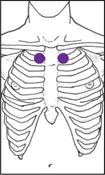 Kidney 27 (KD 27)
Location:
Located off the breastbone, in the hollow below the collarbone. There may be a slight indentation.
Function:
Strengthens the immune system, relieves allergies, alleviates drowsiness, chest congestion, breathing difficulties, asthma, coughing, hiccups, sore throats, anxiety, premenstrual tension, and depression. Also used to improve focus and performance.
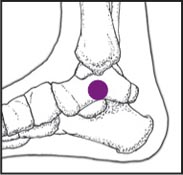 Kidney 6 (KD6)
Location:
In the small indentation approximately 1 inch directly below the inside ankle bone.
Function:
Used for painful, swollen and sore throat, tightness in the throat, painful and red eyes, sleep disturbances, dizziness, irregular and painful menstruation, post-partum difficulties, genital problems, chest fullness, leg tightness, heavy limbs, ankle and foot pain.
Healthy Gift Ideas
Winter is not the healthiest season of the year. Sometimes people eat too much, drink too much and exercise too little. Experts tell us that the average person gains a pound every holiday season—and that pound is never lost.
But does it have to be this way?
This year make winter a healthy season and start by giving healthy gifts.
• Massage. No one disputes the health benefits of massage. From stress reduction to pain relief, massage supports your body and lifts your spirits. Gift certificates for massages using hot stones or essential oils are an especially nice treat. If a massage is too pricey, sign up for a deal-of-the-day website like Groupon and watch for specials. If you’re really daring, buy some oils and give the massage yourself.
• New Organic Sheets. Fresh, soft sheets can be a real luxury that not only feels good but also helps you sleep well. Investigate bamboo sheets. The fiber is very soft and bamboo is easier on the environment than cotton.
• Organic Skin Care. Heated winter air can be very drying, even on young skin. Give your loved one a new scented lotion to enjoy. Be sure to read the label. Look for the fewest ingredients possible and check for ingredient names you recognize and can pronounce.
• Tea Gift Basket. Many teas soothe the nerves and provide valuable antioxidants. Create a basket of your favorite teas and decorate it with a ribbon. For an extra touch, include a small jar of locally harvested honey.
• CSA Membership. A Community Support Agriculture (CSA) farm offers “shares” or boxes of locally grown produce to its members every week. The boxes are a great way to eat local, organic food and to try vegetables that you’ve never had before. Each farm has a different membership plan, so call around to compare.
• Essential Oil Collection. Pure essential oils contain many health benefits including reducing stress, relieving pain and killing germs. Buy a pretty zipper bag and include Lavender, Lemon, and Peppermint for a personalized starter kit.
• Fitness Toys. Kettle Bells, balance balls, stretchy bands… People who work out love their workout toys. Give a simple collection of stretchy bands and your workout addict has options when he can’t make it to the gym.
• Spicy Nuts, Herbal Olive Oils. Everyone loves homemade treats. Find simple recipes and beautiful jars or bottles. Fill the jars, tie them with a ribbon and you have an affordable, healthy gift for the foodie on your list. To make it even easier, use the recipes in this newsletter.
• Workout Mix. Look through your music collection and find your best workout music. Pick music with a strong beat and an uplifting message. Burn the music onto a disc or copy it to a thumb drive.
Infused Olive Oil
Ingredients
- 3 tablespoons fresh chopped herbs, (such as thyme, rosemary, marjoram or chives)
- 1/2 teaspoon kosher salt
- 1/4 cup extra-virgin olive oil
Preparation
Combine herbs, salt and oil in a small bowl.
Tips & Notes
Gift Idea: Consider buying pretty bottles at a vintage store and filling them with your infused olive oil. These gifts taste good and look nice on your shelf.
Nutrition
Per tablespoon: 128 calories; 14 g fat ( 2 g sat , 11 g mono ); 0 mg cholesterol; 0 g carbohydrates; 0 g protein; 0 g fiber; 295 mg sodium; 12 mg potassium.
From: http://www.eatingwell.com/recipes/herbed_extra_virgin_olive_oil.html
Vitamin D: The Sunlight Vitamin
Winter is dark. You go to work in the dark and come home in the dark. On December 21, the shortest day of the year, people in Miami can expect about 10 ½ hours daytime while people in Seattle will only have about 8 ½ hours.
Short days mean more than just coping with dark commutes. Without enough sunlight, your body can’t produce Vitamin D.
Your body needs sunlight to produce Vitamin D. Vitamin D is important for absorption of calcium and regulating the immune system. It keeps your brain healthy, helps you maintain your weight and helps reduce your risk of cancer and heart attacks.
Low levels of Vitamin D are linked with many health risks. Vitamin D deficiency can cause Rickets, a condition of soft, weak bones, but it also plays a role in heart disease, diabetes and cancer. Studies have even linked it with an increased likelihood of catching a cold.
Scientists disagree about the extent of the problem. Different studies estimate from 10 – 75% of US teens and adults to have a Vitamin D deficiency. But everyone agrees that Vitamin D levels are dropping.
Certain groups have a higher incidence of Vitamin D deficiency. Blacks and Hispanics have the lowest levels of Vitamin D. People with no college education, obesity, poor health, hypertension, low HDL cholesterol or who don’t consume milk daily also show deficiencies.
But everyone should be concerned. Because more and more people use sunscreens, stay indoors, or wear long sleeves, scientists and doctors worry that Vitamin D deficiency will continue to grow.
How to Increase your Vitamin D
Sunlight is the best way to increase your Vitamin D however it’s a tricky balance. Using just a SPF 15 sunscreen cuts the skin’s Vitamin D production by 99 percent. But of course, soaking in the sun without sunscreen may increase your risk of skin cancer.
There are several dietary sources for Vitamin D. Fatty fishes like salmon, tuna, and mackerel contain healthy amounts. Some fortified foods like milk, orange juice or cereal contain high Vitamin D levels. Cod liver oil is also high.
Supplements are another option. Vitamin D3 is the best supplement form to take for those who have deficiencies. Vitamin D requires other fat-soluble vitamins such as Vitamin A and K and certain trace minerals in order to be properly utilized by the body. Use a holistic view when you choose your supplement. Consult with your acupuncturist if you are unsure which is best for you.
Curried Cashews
Ingredients
- 6 tablespoons lemon juice
- 6 tablespoons curry powder
- 4 teaspoons kosher salt
- 6 cups unsalted cashews
Preparation
- Position racks in the upper and lower thirds of oven; preheat to 250°F.
- Whisk lemon juice, curry powder and salt in a large bowl. Add cashews; toss to coat. Divide between 2 large rimmed baking sheets; spread in an even layer.
- Bake, stirring every 15 minutes, until dry, about 45 minutes. Let cool completely. Store in an airtight container.
Tips & Notes
Make Ahead Tip: Store in an airtight container for up to 3 weeks. This recipe works great for a holiday gift. Make several batches, put them in pretty containers, and you have a delicious treat for your loved ones.
For more healthy spiced nut recipes, visit:
www.eatingwell.com/recipes_menus/recipe_slideshows/healthy_spiced_nuts_recipes
Nutrition
Per 2-tablespoon serving: 101 calories; 8 g fat ( 2 g sat , 5 g mono ); 0 mg cholesterol; 6 g carbohydrates; 0 g added sugars; 3 g protein; 1 g fiber; 96 mg sodium;
111 mg potassium.
From: www.eatingwell.com/recipes/curried_cashews.html
Wash Up
Your Grandmother was right—wash your hands! Wash them before meals, after meals, and periodically through the day. It’s not just old-fashioned hygiene; it’s good medical sense.
Washing your hands is one of the best ways to prevent a cold. Doctors tell us that adults average 2 – 4 colds/year and children average 6 – 8 colds/year. Washing your hands reduces the bacteria and viruses on your hands, decreasing your exposure to the germs that cause colds. Even the FDA recommends that the best defense against colds is plain old hand washing.
When you wash your hands, lather up and wash your entire hand—front and back. Lather for a full 20 seconds, a very long time if you’re not used to it. Try singing the Happy Birthday song twice to estimate the time.
Research shows that there is no increased benefit from using anti-bacterial soap. Use common hand soap but be sure to scrub the whole time. Most of the benefit of hand washing is simply rinsing the germs off your hands.
If you can’t wash your hands with soap and water, then hand sanitizer is the next best thing. Not all hand sanitizers are equal. Look for alcohol based sanitizers and avoid anything with triclosan. For added natural benefits, look for hand sanitizers with essential oils.